

Knee pain does not take a day off. It follows you on road trips, airplane rides, long drives, and hotel stays. For millions of people living with joint discomfort, managing pain while traveling is one of the biggest challenges they face. However, the right support can change everything.
An orthopedic pillow designed for knee support is a small but powerful tool. It can reduce pressure, align your joints, and help you rest comfortably no matter where you are. This article explains how to use one effectively when you are away from home. Additionally, it covers what to look for, how to position it correctly, and when it works best.
Whether you are a frequent flyer or an occasional road tripper, this guide will help you stay comfortable and in control of your knee health while traveling.
Understanding Knee Pain and Why Travel Makes It Worse
Knee pain has many causes. Arthritis, past injuries, bursitis, and general joint wear are among the most common. Each of these conditions shares one trigger: prolonged pressure and poor alignment.
Travel puts your knees in difficult positions for extended periods. Airplane seats leave little room to stretch. Car seats often force your knees into a bent angle for hours. Hotel mattresses may be too firm or too soft, which throws your spine and hips out of alignment and increases knee strain.
Additionally, the disruption of your normal routine while traveling means you may not have access to your usual pain management tools. Therefore, bringing a dedicated knee support pillow gives you one reliable solution that works across all environments.
What an Orthopedic Knee Pillow Actually Does
An orthopedic knee pillow is shaped to fit between or beneath your knees. It is typically made from memory foam or a similar contouring material. The goal is to reduce the pressure that builds up in the knee joint when your legs are not properly supported.
When you sleep on your side, for example, your upper knee drops toward the mattress and your hip rotates inward. This twisting motion puts strain on your knee ligaments and lower back. Placing a pillow between your knees corrects this alignment immediately.
Similarly, when you are seated for long periods, placing a pillow beneath your knees raises them slightly. This reduces the compression on the back of the knee and improves circulation. Therefore, the pillow serves both a structural and a therapeutic purpose.
Choosing the Right Portable Support Pillow for Travel
Not all knee pillows are built for life on the move. When selecting a portable support pillow for travel, you need to weigh a few practical factors alongside comfort and function.
Size and Packability
A knee pillow designed for home use may be too bulky for a carry-on bag. Look for compact models that compress easily or come in travel-ready sizes. Some pillows are designed with a removable cover and a compressible foam core. These pack down to a fraction of their expanded size.
Additionally, consider the weight. A heavy pillow adds unwanted bulk to your luggage. Most travel-specific knee pillows weigh less than half a kilogram, making them easy to pack without sacrificing comfort.
Material and Firmness
Memory foam is the most popular choice. It contours to the shape of your knee and redistributes pressure evenly. However, it retains heat, which may be uncomfortable in warm climates. Gel-infused memory foam addresses this by drawing heat away from the body.
Firmness is also important. A pillow that is too soft collapses under the weight of your leg and provides little support. One that is too firm creates new pressure points. Medium-firm foam tends to offer the best balance for most knee conditions.
Cover and Hygiene
Travel exposes your pillow to different environments. Choose a model with a removable, washable cover. This allows you to keep it clean between trips. Additionally, a cover made from breathable fabric helps manage moisture during overnight use.
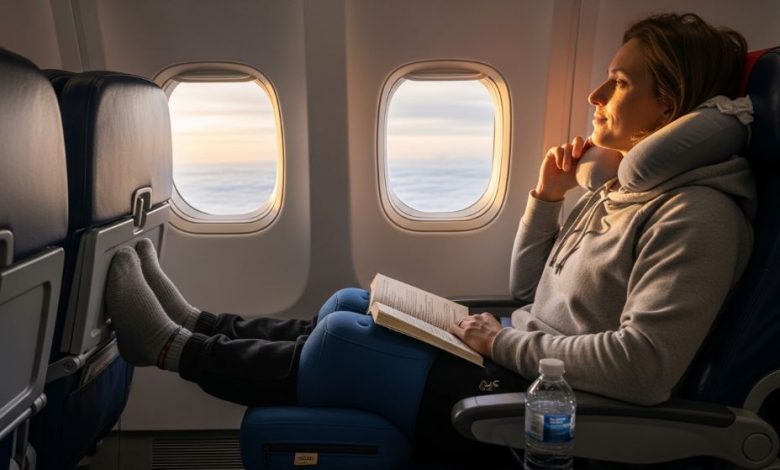
How to Use Your Knee Pillow on an Airplane
Airplane seats are notoriously uncomfortable for people with knee issues. The limited legroom keeps your knees bent at an awkward angle for the entire flight. However, a knee pillow can help, even in economy class.
Place the pillow beneath both knees while seated. This slightly elevates your legs and reduces the downward pull on the knee joint. It also encourages better circulation by keeping the back of the knee from pressing hard against the seat edge.
If you are on a long flight where reclining is an option, try placing the pillow under your knees as you recline. This mimics a supportive resting position and reduces the strain on both your knees and lower back.
Additionally, stand up and walk the aisle every hour or so. A pillow reduces strain, but movement is still the best remedy for circulation during long flights. Use the pillow as a supplement to movement, not a replacement.
Using Your Knee Pillow During Long Car Rides
Long car rides present a different challenge. Whether you are a driver or a passenger, your knees remain in a fixed position for extended stretches. This static posture causes stiffness and amplifies existing pain.
As a passenger, place the pillow under your knees or between them depending on your seating preference. If you tend to slide down in the seat, a pillow under your knees will raise them slightly and encourage better posture.
As a driver, using a pillow between the knees is not practical for safety reasons. However, placing a thin version under your right knee can reduce the strain from holding the gas pedal position. Make sure it does not interfere with your ability to operate the pedals safely.
Therefore, always prioritize safety over comfort when driving. Stop every ninety minutes to stretch and walk. Even a five-minute break significantly reduces knee stiffness on long drives.
Getting a Good Night’s Sleep in a Hotel with Knee Pain
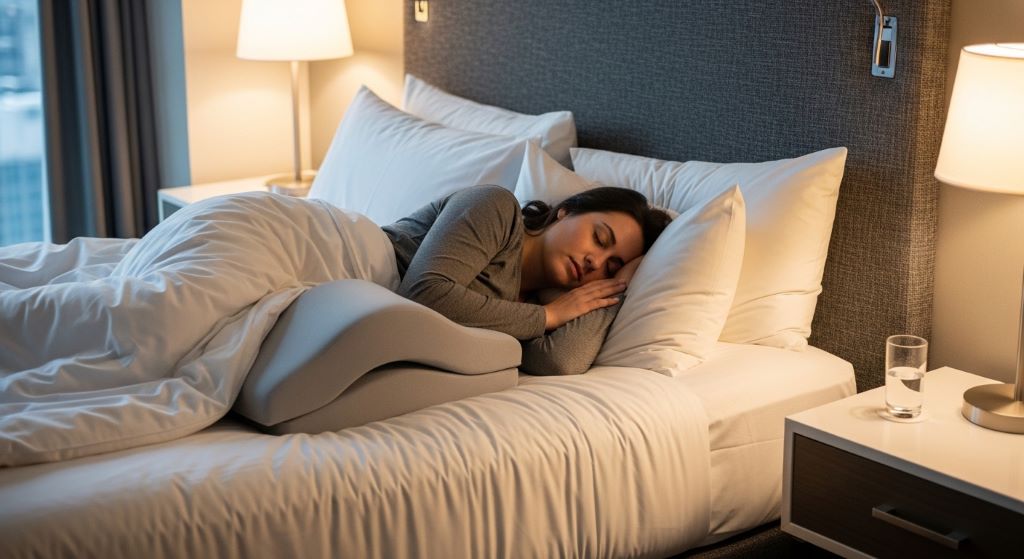
Hotel mattresses are unpredictable. Some are too soft, others too firm. For someone with knee pain, an unsupportive sleep surface can turn a restful night into an exhausting one. Fortunately, your orthopedic pillow travels with you and provides consistency across any sleeping environment.
Sleeping on Your Side
Side sleeping is the most common position. Place the orthopedic knee pillow between your knees so that your upper knee rests on it without dropping. Your hips should remain stacked, meaning one hip directly above the other. This position keeps the spine neutral and removes lateral stress from the knee.
Some orthopedic pillows come with a strap or contoured shape that keeps them in place even as you move during the night. This feature is especially useful for restless sleepers.
Sleeping on Your Back
Back sleeping is ideal for joint health. Place the pillow beneath both knees to create a slight bend. This reduces hyperextension and relieves pressure on the back of the knee. It also takes strain off the lower back by flattening the natural curve of the lumbar spine.
Additionally, this position promotes good circulation to the legs overnight. Many people with knee pain wake up with less stiffness when they sleep on their back with knee support.
Sleeping on Your Stomach
Stomach sleeping is the least recommended position for people with joint pain. However, if it is your natural preference, place the pillow under your ankles rather than your knees. This elevates the lower leg slightly and prevents your knees from pressing flat against the mattress.
Travel Health Tips to Complement Your Knee Pillow
A knee pillow is just one piece of the puzzle. Combining it with other travel health habits creates a more complete approach to managing knee pain away from home.
- Stay hydrated. Dehydration affects joint fluid and increases inflammation. Drink water consistently throughout your journey, especially on flights where cabin air is dry.
- Pack anti-inflammatory medication if prescribed or recommended by your doctor. Having it within easy reach prevents scrambling when pain flares unexpectedly.
- Wear compression socks during long flights or drives. They support circulation in the lower legs and reduce swelling around the knee.
- Do simple knee stretches at rest stops and during layovers. Straightening the leg fully and holding it for a few seconds helps relieve tightness.
- Request aisle seats on flights so you can extend your leg more freely and stand without disturbing others.
Therefore, combining your portable support pillow with these travel health habits gives you the best possible chance of arriving at your destination feeling comfortable and ready to move.
When to Use Your Knee Pillow and When to See a Doctor
An orthopedic knee pillow is a supportive tool, not a medical treatment. It is most effective for managing mild to moderate discomfort related to posture and pressure. However, it is not a substitute for professional medical advice.
Use the pillow regularly if you experience general joint stiffness, post-surgical recovery discomfort, mild arthritis pain, or sciatica that radiates into the knee. These are situations where positional support makes a meaningful difference.
However, if your knee pain is severe, sudden, or accompanied by swelling, redness, or warmth, consult a doctor before traveling. These may be signs of a condition that requires treatment, not just positional support.
Additionally, if your pain significantly worsens during or after travel despite using support tools, speak with an orthopedic specialist. They can assess your condition and recommend additional therapies, including physical therapy, bracing, or other interventions.
Making the Most of a Compact and Practical Investment
An orthopedic knee pillow is one of the most cost-effective travel accessories available for people with joint pain. Most quality models cost between twenty and sixty dollars. That is a small price to pay for multiple nights of comfortable sleep and hours of reduced pain during transit.
Moreover, the benefits extend beyond pain relief. Better sleep improves your mood, energy, and concentration. When you travel for work, arriving well-rested gives you a clear advantage. When you travel for leisure, waking up without pain means you can actually enjoy your trip.
Therefore, think of your knee pillow not just as a pain management tool but as an investment in your overall travel experience. It is a lightweight, packable addition to your luggage that delivers significant returns.
Conclusion
Knee pain and travel do not have to go hand in hand. With the right orthopedic pillow and a few smart habits, you can manage your discomfort effectively whether you are on a plane, in a car, or staying in a hotel.
Choose a portable support pillow that is compact, made from quality memory foam, and comes with a washable cover. Learn the correct positions for your sleeping style and use the pillow consistently throughout your journey. Additionally, pair it with travel health strategies like staying hydrated, stretching, and wearing compression socks.
Your knees support you every day. It is only right to support them back, especially when you are on the go. With a little preparation and the right tools, travel can be something you look forward to rather than dread.
Frequently Asked Questions
1. Can I use an orthopedic knee pillow on any type of mattress?
Yes. An orthopedic knee pillow is designed to work independently of the mattress you are sleeping on. It provides consistent support regardless of whether the mattress is firm, soft, or somewhere in between. This makes it especially useful for hotel stays where you cannot control the mattress quality.
2. How do I keep the knee pillow in place while I sleep?
Some orthopedic knee pillows include a leg strap that holds them in position through the night. If yours does not have one, look for a contoured hourglass shape. These designs grip the knee naturally due to their form. Additionally, placing the pillow slightly higher than the knee also helps prevent it from slipping downward.
3. Is an orthopedic knee pillow useful after knee surgery?
Yes, many post-surgical patients use knee pillows during recovery. However, always consult your surgeon or physical therapist before using any support device after a procedure. They can advise you on the correct position and level of elevation appropriate for your specific recovery stage.
4. Can I use my knee pillow in a wheelchair or on public transport?
Absolutely. A knee pillow is versatile and works anywhere you are seated for extended periods. On public transport, placing it beneath your knees is often the most practical option. In a wheelchair, it can be positioned under the knees or between them depending on your comfort needs and chair design.
5. How often should I replace my orthopedic knee pillow?
Most quality memory foam knee pillows last between one and three years with regular use. You will know it is time to replace yours when the foam no longer springs back to its original shape or when you notice reduced support during use. Traveling frequently accelerates wear, so inspect your pillow regularly and replace it when it begins to lose its structure.
Related Topics:
How to Relax at the Dentist’s Office – The Truth on Dental Anxiety
An introduction to body dysmorphic disorder
