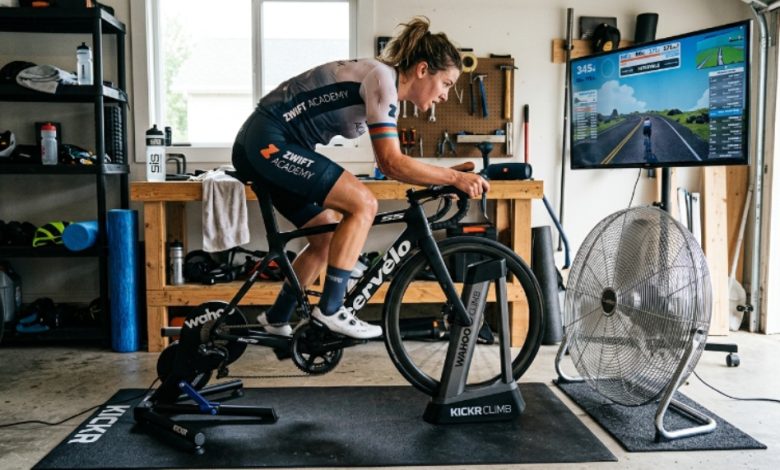
Every indoor cyclist knows the feeling. Ten minutes into a hard session, sweat is already soaking through your kit. Twenty minutes in, the room feels like a sauna. By thirty minutes, your legs are still willing but your body is screaming to stop. The culprit is not your fitness. It is heat.
Indoor workout overheating is one of the most common reasons cyclists cut sessions short at home. Without the natural breeze of outdoor riding, your body struggles to manage its own temperature. Performance drops, discomfort rises, and what should have been an hour of solid training becomes a sweaty, shortened ordeal.
The solution is simpler than most people expect. A well-placed cooling fan changes everything. This article explains exactly why fans work, how they support cycling endurance, and how to use them to get more from every session you do indoors.
The Science Behind Why You Overheat on a Stationary Bike
Your body is remarkably good at regulating temperature. During exercise, it produces sweat and pushes blood toward the skin. As that sweat evaporates, it carries heat away and keeps your core temperature in check. This system works brilliantly outdoors. Indoors, it breaks down quickly.
The reason is airflow. When you ride outside, even at a slow pace, forward motion creates a constant wind over your skin. That wind accelerates the evaporation of sweat and removes heat from your body continuously. On a stationary bike, you are not moving through air. The air around you is still, sweat evaporates slowly, and heat accumulates on your skin and within your core.
Additionally, most home training rooms are small and poorly ventilated. As you work harder, the room itself gets warmer. The humidity rises as moisture from your breathing and sweating fills the space. Within twenty minutes, conditions can deteriorate to a point where your body is fighting the environment instead of adapting to the workout.
Research consistently shows that core temperature directly affects performance. As it rises, your heart rate climbs even when your power output stays the same. Your brain begins to register fatigue earlier. Your body prioritises cooling over performance, and the result is a significant drop in what you can sustain and for how long.
What a Cooling Fan Actually Does for Your Body
A fan does not lower the temperature of a room the way an air conditioner does. Instead, it moves air across your skin, which is exactly what your body needs to cool down efficiently.
When air moves over your skin, it speeds up the evaporation of sweat. Faster evaporation means faster heat removal. Your skin temperature drops, blood that was rushing to the surface to dump heat can return to your working muscles, and your cardiovascular system no longer has to work double duty managing both cooling and exercise demands.
The effect on performance is measurable. Studies on exercise physiology show that maintaining a lower skin temperature during intense effort allows athletes to sustain higher power outputs for longer before fatigue sets in. For indoor cyclists specifically, the difference between training with and without a fan is not marginal. It is the difference between cutting a session short and completing it at full intensity.
Therefore, a fan is not a comfort item. It is a performance tool. Treating it as one changes how you think about your training setup.
How Fans Directly Extend Your Ride Time
The link between cooling and cycling endurance is well established. When your body temperature is controlled, several things happen that allow you to ride longer.
Your heart rate stays lower at the same power output. This means you have more cardiovascular headroom before you reach your limit. Sessions that previously pushed you to the edge of your maximum heart rate become manageable, and you can sustain effort for significantly longer before crossing that threshold.
Your perception of effort also drops. Research shows that feeling cooler reduces how hard your brain judges the work to be. When exercise feels more manageable, you are naturally able to push through longer sessions without the same mental resistance. This psychological benefit is just as real as the physiological one.
Additionally, lower skin and core temperatures reduce the accumulation of heat stress fatigue. Heat stress fatigue is different from muscular fatigue. It is the exhaustion that comes from your body working hard to keep itself cool. Removing that burden allows your muscles and cardiovascular system to focus entirely on the demands of the ride. The result, in practical terms, is more kilometres, more minutes, and more quality work completed per session.
Choosing the Right Fan for Indoor Cycling
Not every fan delivers the same results. The type you choose and where you place it makes a significant difference in how effectively it supports your training.
High-Velocity Fans Outperform Standard Models
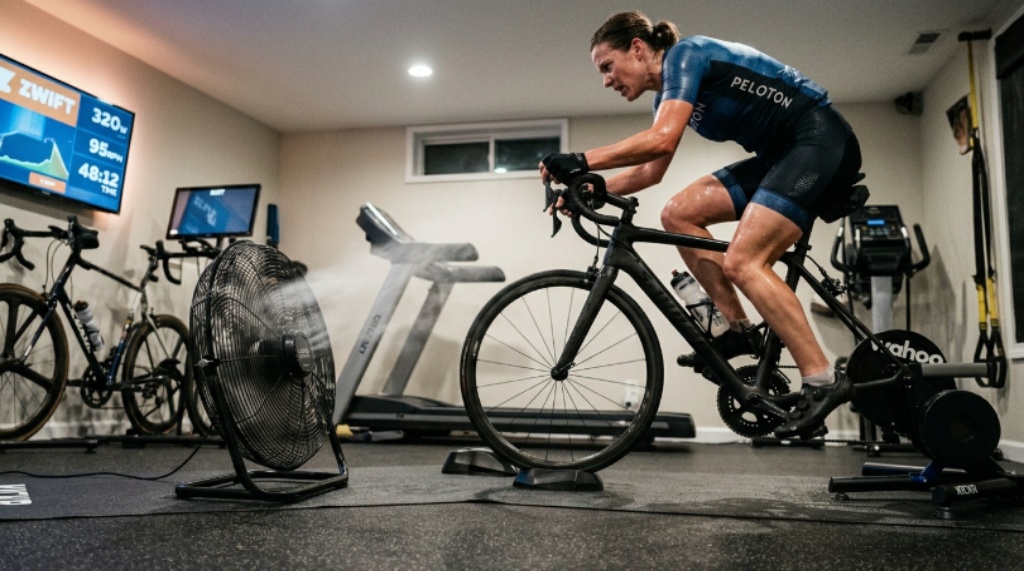
Standard desk fans and household pedestal fans move a modest volume of air at low speed. For light activity, that is sufficient. However, for indoor cycling at moderate to high intensity, you need considerably more airflow. High-velocity fans, the kind used in gyms, workshops, and commercial settings, move large volumes of air at high speed. The difference is immediately noticeable.
A high-velocity floor fan pointed directly at your torso and face can replicate a significant portion of the airflow you would experience cycling at 25 to 30 kilometres per hour outdoors. That is the threshold at which most cyclists feel genuinely cool and comfortable during a hard effort.
Smart Fans with Variable Speed Settings
Some modern fans allow you to adjust airflow speed to match your effort level. During a warm-up, a lower setting is comfortable. As intensity increases, you can crank the fan up to manage rising heat output. This gives you precise control and avoids the discomfort of blasting cold air during easy recovery periods.
Additionally, some trainers and cycling apps now integrate with smart fans directly. The fan speed adjusts automatically based on your power output or heart rate data, creating a genuinely responsive cooling system with no manual adjustment needed.
Placement Is Everything
The most powerful fan in the world underperforms if it is pointed in the wrong direction. Position your fan directly in front of you, aimed at your chest, torso, and face. This targets the areas where heat generation and sweat production are highest. It also mimics outdoor riding conditions more closely than a fan positioned to the side or behind you.
For even better results, add a second fan slightly off to one side. The overlapping airflow eliminates dead spots and keeps the coverage consistent across your entire upper body throughout the session.
Combining Fans with Other Cooling Strategies
A fan works best as part of a broader cooling approach. Combining it with other strategies creates a training environment where indoor workout overheating becomes genuinely rare.
Pre-cooling your room with air conditioning before you start is highly effective. Set the thermostat 30 minutes before your session begins so the room reaches its target temperature before you clip in. Cool air combined with strong fan airflow creates conditions that are difficult for heat to overcome even during the hardest intervals.
Cold water is another powerful ally. Drinking chilled water throughout your ride helps lower your core temperature from the inside. Wetting a small towel with ice water and placing it on your neck during recovery intervals accelerates surface cooling where blood vessels are closest to the skin.
Wearing lightweight, moisture-wicking fabrics gives the fan more to work with. The more efficiently your kit releases sweat to the surface of the fabric, the more effectively moving air can evaporate it. A sleeveless jersey in a thin open-weave synthetic fabric is significantly more responsive to fan airflow than a thick cotton t-shirt.
Setting Up Your Ideal Indoor Cycling Station
Building a training space that keeps you cool requires thinking about a few elements together. Here is a straightforward approach that works for most home setups.
Start with location. Choose the coolest room available and position your bike away from direct sunlight. Ensure there is at least one window that can be opened for fresh air on mild days.
Next, position a high-velocity floor fan one to two metres in front of your bike at roughly chest height. Run it at high speed during hard efforts and reduce the setting during recovery. If budget allows, add a ceiling fan to circulate air through the upper portion of the room.
Place a bottle of cold water within easy reach. Keep a small towel soaked in cold water in a bowl of ice beside your bike for use during recovery intervals. Wear your lightest cycling kit regardless of the season.
Finally, pre-cool the room if you have air conditioning. Start this process 30 minutes before you plan to ride. These steps together create a training environment that supports longer, harder, and more consistent sessions throughout the year.
Conclusion
Heat is a performance limiter that most indoor cyclists underestimate. It shortens sessions, reduces intensity, and creates unnecessary discomfort. However, the fix is accessible and affordable.
Cooling fans directly address the core problem by restoring the airflow your body relies on to regulate temperature. They lower your skin temperature, reduce cardiovascular strain, and make effort feel more manageable. The result is genuine improvement in cycling endurance, session by session.
Choose a high-velocity fan, position it directly in front of you, and combine it with cold hydration, lightweight kit, and a pre-cooled room for the best results. Preventing indoor workout overheating is not complicated. It simply requires the right setup and the understanding that a fan is not a luxury. It is an essential piece of your training equipment.
Frequently Asked Questions
Does a cooling fan actually improve cycling performance indoors?
Yes. Airflow from a fan accelerates sweat evaporation, which lowers skin and core temperature. This reduces cardiovascular strain at a given power output, allowing you to sustain effort for longer before fatigue sets in. The performance benefit is measurable and significant.
Where should I position my fan for indoor cycling?
Place it directly in front of you at chest height, about one to two metres away. This directs airflow over your torso and face, which are the areas where your body generates and releases the most heat during exercise.
What size fan do I need for indoor cycling?
A high-velocity floor fan with a strong motor is ideal. Look for models marketed for gyms, workshops, or industrial use. These move far more air than standard household fans and make a much greater difference during intense sessions.
Can overheating affect my heart rate during indoor cycling?
Yes. As your core temperature rises, your heart rate increases even if your power output stays constant. This is called cardiovascular drift. A cooling fan helps prevent this drift, keeping your heart rate more stable and your training data more accurate.
Is one fan enough or do I need multiple?
One well-positioned high-velocity fan makes a substantial difference. However, adding a second fan slightly off to the side provides broader coverage and eliminates warm spots. A ceiling fan running simultaneously further improves air circulation throughout the room.