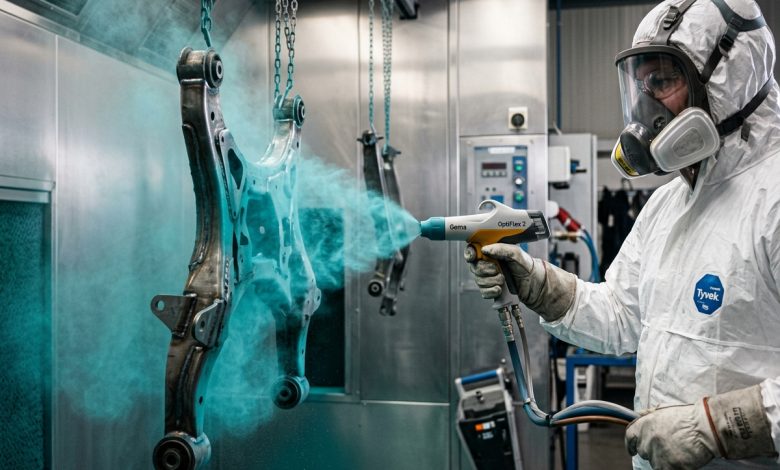
Bringing powder coating in-house changes more than where finishing happens; it gives a shop more control over scheduling, quality checks, and production flow. Better equipment can also shorten handoffs between fabrication and finishing, which matters when customer deadlines are tight or part designs change often. Strong planning matters because the real value comes from matching the system to the work rather than buying capacity the shop cannot use.
Expert Start-up and Calibration
Professional start-up helps a new line begin with airflow, temperature controls, gun settings, and safety devices adjusted for actual operating conditions. Experienced technicians can catch issues such as weak grounding, uneven booth airflow, or incorrect burner settings before those problems show up as coating defects, wasted powder, or slow production.
Calibration gives operators a dependable baseline for daily work and makes later troubleshooting much easier. Using Reliant powder coating equipment can support that process by giving shops a defined set of controls and operating points that can be documented, checked, and repeated across shifts.
Training during commissioning also helps employees understand why settings matter instead of simply copying numbers from a control panel. Shops reviewing Reliant powder coating equipment for sale can benefit from planning start-up around their common parts, powders, rack loads, and finish requirements so operators learn under realistic production conditions.
Faster Curing Temperature Ramp-up
Quick heat-up can reduce the time an oven sits below production temperature at the beginning of a shift or after a heavy load enters the chamber. Properly sized powder coating ovens with suitable burners, insulation, and circulation systems can help restore chamber temperature without creating unnecessary waiting between batches.
Thermal mass still determines how fast the metal itself reaches cure temperature, so faster oven-air temperature does not automatically mean a shorter cure. Configured Reliant powder coating ovens can help businesses manage this stage when heating capacity is selected around part thickness, rack density, normal batch weight, and the powder manufacturer’s cure schedule.
Recovery speed becomes especially important in shops that open oven doors frequently throughout the day. Matching a Reliant industrial powder coating oven to that workload can help prevent curing from becoming a bottleneck when large steel parts or repeated batches pull significant heat from the chamber.
Reduced Fuel and Operating Costs
Fuel use depends on more than burner size because insulation condition, door seals, loading habits, airflow, and batch scheduling all affect how much heat the system must replace. Well-maintained Reliant powder curing ovens can help shops limit preventable heat loss while keeping chamber conditions more stable from one production cycle to the next.
Scheduling also influences operating cost because half-empty loads and frequent restarts can consume energy without producing much finished work. Grouping similar parts and running sensible batch sizes can reduce repeated warm-up and recovery cycles, while oversized equipment may burn more fuel than everyday production actually requires.
Package selection can support efficiency across the entire line instead of treating the oven as an isolated purchase. Coordinated use of a Reliant powder coating equipment package can help businesses align booth capacity, curing volume, and material handling so one stage is not consuming labor and energy while another waits.
On-site Modular Reconfiguration Flexibility
Manufacturing needs can change as new contracts, larger products, or different production methods enter the shop. Modular panels, extension sections, door changes, and revised material-handling paths can make equipment easier to adapt without forcing a company to replace an otherwise useful finishing line.
Layout flexibility matters when a manufacturer adds a larger fabrication cell, changes rack sizes, or needs more clearance around an oven. Planning Reliant powder coating systems with future changes in mind can support those needs when the original installation leaves suitable space for service access, added sections, revised utilities, or a different part-flow path.
Expansion decisions should still be based on realistic demand rather than the assumption that extra size always brings better value. Businesses comparing a Reliant powder coating oven for sale can review current chamber use, expected part dimensions, building space, and available utilities before deciding whether added capacity or later modular expansion makes more sense.
National Code-compliant Safety Features
Safe operation starts with equipment designed and installed around applicable electrical, combustion, ventilation, and fire-safety requirements. Controls such as interlocks, exhaust systems, burner safeguards, and emergency functions need to work together because powder coating places heat, airborne material, electrical equipment, and moving parts within the same production area.
Compliance also depends on how the shop operates and maintains the system after installation. Clear procedures for filter service, grounding checks, housekeeping, burner inspection, and employee training help preserve built-in protections instead of treating safety as something completed once the equipment passes its initial inspection.
Reliant Finishing Systems offers oven products and complete equipment packages for manufacturers improving an in-house finishing department. Its oven range lets shops select heating capacity, chamber dimensions, airflow, and loading arrangements around the parts they cure, while broader packages can connect that oven choice with the booth and supporting equipment needed to keep production moving without creating unnecessary gaps between production stages.