One Car, Three Challenges: Choosing Window Tint, Paint Protection Film, and Ceramic Coating in Matthews, North Carolina

Key Takeaways
- Window tint, paint protection film, and ceramic coating address different vehicle-care needs.
- Matthews drivers face bright summer sun, pollen, rain, road grit, and daily Charlotte-area traffic.
- Window tint supports cabin comfort, PPF protects impact-prone paint, and ceramic coating simplifies routine cleaning.
- The best protection package depends on how, where, and how often a vehicle is driven.
From weekday commutes on Independence Boulevard to family trips around Mecklenburg and Union counties, vehicles in Matthews, North Carolina, encounter more than ordinary wear. Summer heat can make a parked cabin uncomfortable, spring pollen can cling to paint, and highway debris can leave a lasting mark on a front bumper. Choosing the right protection starts with understanding which problem matters most to your vehicle. For drivers comparing appearance, comfort, and long-term maintenance, ceramic coating for cars in Matthews, NC, can be part of a broader protection plan. A coating is not a substitute for tint or paint protection film, but it can complement both when the goal is to keep exterior surfaces cleaner and easier to maintain.
Why One Product Cannot Protect Every Surface
Vehicles are made of different materials that face different risks. Glass and interior trim absorb solar energy. Painted front-end panels take the brunt of gravel, insects, and road spray. Exterior paint also collects pollen, tree sap, mineral-heavy rainwater, and bird droppings. A practical plan assigns the right product to the right surface rather than expecting a single service to do everything. A simple way to compare the options is to think in three categories: window tint for glass and cabin comfort, paint protection film for impact zones, and ceramic coating for paint cleanliness, water behavior, and gloss. Each solution can stand alone, but they are often more useful together because they solve separate problems. When you are searching for “automotive ceramic coating near me,” consider your parking and driving routine, as well as your appearance. A car that spends every day outdoors near Matthews may benefit from easier wash maintenance. At the same time, a vehicle that regularly travels I-485 or U.S. 74 may need more physical protection on the front end.
What Window Tint Can Do
Quality window film can reduce glare and help limit the solar heat that enters the cabin. That matters during humid North Carolina summers, especially for vehicles parked at offices, shopping centers, schools, and athletic fields. Film also blocks ultraviolet exposure that may contribute to fading, drying, and cracking in interior materials over time.
Common Film Choices
- Dyed film provides basic shade and privacy.
- Carbon film offers a dark appearance without a metallic look.
- Ceramic film is often chosen for stronger heat control and signal-friendly performance.
Darker is not automatically cooler. Heat rejection depends on the film construction and performance ratings, not only the visible shade. Windshield film also requires special care because visibility, placement, and North Carolina requirements all matter.
North Carolina Tint Rules to Check
As of December 1, 2025, window-tint checks are no longer part of North Carolina safety inspections, but the tint law still applies. Drivers should review the state’s current window-tint requirements for after-factory installations before selecting a film. North Carolina states that tint may not be darker than 32 percent when measured with an approved meter, and windshield tint may not extend more than 5 inches below the top or the AS1 line, whichever is longer. Keep medical-exemption documentation in the vehicle when applicable.
Where Paint Protection Film Makes Sense
Paint protection film, often called PPF or clear bra, is a transparent urethane film designed to help absorb minor impacts and resist surface wear. It is especially valuable in areas routinely exposed to flying debris, scuffs, and abrasions. For Matthews drivers, that can mean damage from road construction debris, gravel shoulders, and long stretches of highway driving.
- Front bumper, hood leading edge, and front fenders
- Side mirrors, rocker panels, and door cups
- Rear cargo ledges on SUVs and trucks
- High-contact areas near door edges and handles
A partial-front package protects the most vulnerable leading surfaces at a lower cost. Full-front or full-body coverage makes more sense for luxury vehicles, frequent highway drivers, off-road vehicles, or owners who want maximum physical protection for the paint. PPF is the option to prioritize when rock chips, not washing difficulty, are the biggest concern.
What Ceramic Coating Adds
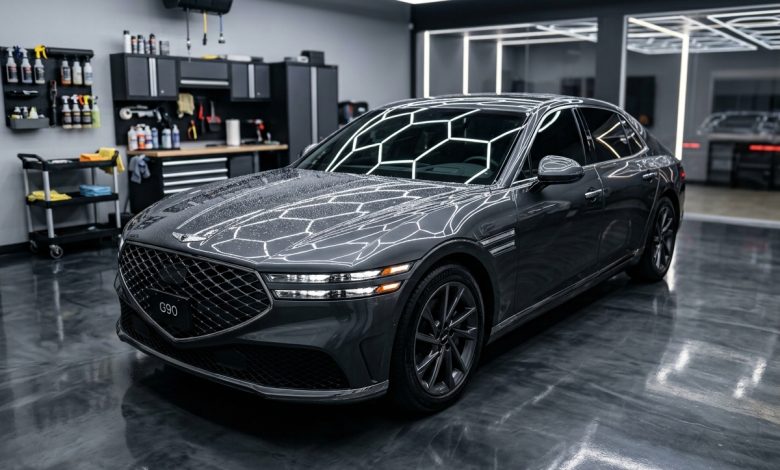
Ceramic coating is a bonded surface treatment, not a thick shell of armor. It can add gloss, improve water beading, and make it easier to remove routine dirt and contamination during washing. That is helpful during the Charlotte-area pollen season and after rainy days that leave grime along lower doors and rear panels. Set realistic expectations. Ceramic coating does not prevent stone chips, deep scratches, or collision damage. Proper preparation is essential because a coating can preserve the condition beneath it, including visible flaws. Regular washing remains necessary, but the process is usually simpler when contamination does not bond as readily to the surface.
How These Services Work Together
- Choose window tint when glare, cabin heat, and UV exposure are the main concerns.
- Choose PPF for bumpers, hoods, mirrors, and other high-impact paint areas.
- Choose ceramic coating when easier washing, water behavior, and paint gloss matter most.
- Combine services only when each addresses a distinct risk.
For example, a Matthews daily commuter might choose ceramic window film and front-end PPF, then add ceramic coating for easier upkeep. A weekend vehicle stored in a garage may need only targeted PPF on vulnerable areas and a coating to preserve a polished appearance.
Modern Vehicles Need Extra Attention
Many current vehicles use windshield cameras, radar, and sensors for lane assistance, collision warnings, and automatic braking. Film placement, decals, dash devices, and accessories should never obstruct these systems. The federal overview of how driver-assistance technologies work also reinforces an important point: these features support the driver, but they do not replace attention behind the wheel. Check the owner’s manual before adding windshield film or accessories near camera housings.
A Simple Way to Choose the Right Protection
- Review how the vehicle is used, including commuting, road trips, hauling, and outdoor recreation.
- Consider where it is parked. Outdoor parking increases exposure to sun, pollen, rain, and droppings.
- Identify the primary concern: heat, glare, chips, scratches, cleaning, or appearance.
- Set a practical budget and protect the highest-risk areas first.
- Ask about surface preparation, curing time, cleaning guidance, warranty coverage, and sensor compatibility.
Conclusion
Window tint, PPF, and ceramic coating each have a clear role for vehicles in Matthews. Tint focuses on cabin comfort, glare reduction, privacy, and protection through the glass. PPF defends high-risk paint areas from rock chips, road debris, and physical wear. Ceramic coating supports a cleaner, glossier finish while making routine washing and maintenance easier. Choosing between them depends on parking conditions, mileage, driving habits, budget, and how long the vehicle will be kept. Some drivers may benefit from one service, while others may prefer a combination for broader protection. Proper surface preparation and professional installation also matter because even quality products can perform poorly when applied incorrectly. Regular washing and inspections remain necessary after installation. The smartest choice is not necessarily the largest package. It is the protection plan that fits the vehicle, the driver, and the roads ahead.